DIY air conditioning in student accommodation
I loved so many things living in student accommodation when I was at university in the UK. Everything I needed was within walking distance on campus. The door locks used convenient fob keys[1]. The shared kitchen was a nice place to socialize. And it also had industrial-size fridges and freezers, which made frozen meals cost-effective by buying in bulk.
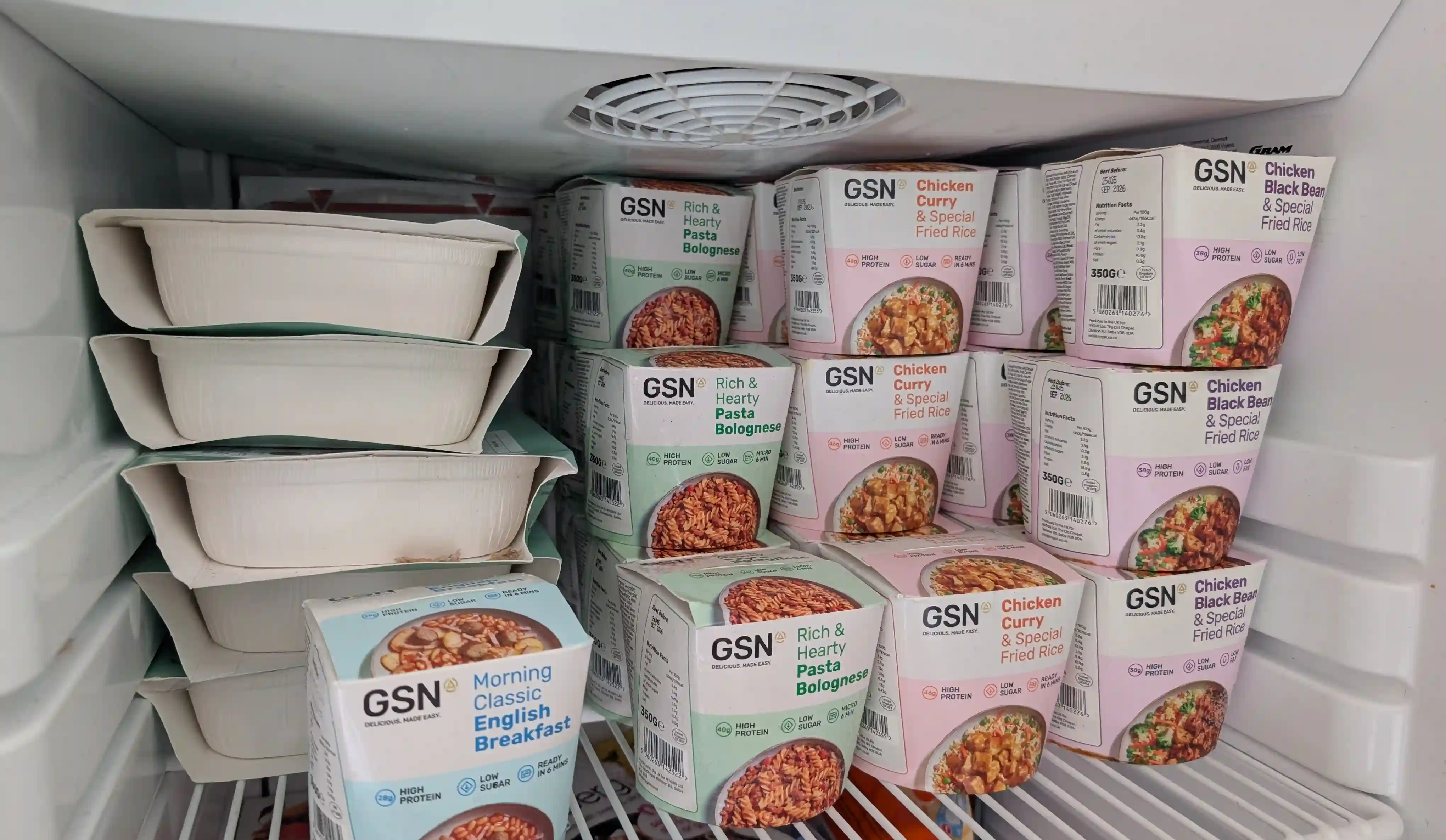
A freezer shelf stocked with Field Doctor and GSN meals
At the end of spring, it was starting to get really hot outside - and especially inside. With indoor temperatures starting to approach 29°C, sleeping was not really comfortable. Even with heat waves becoming more extreme in recent years, central air conditioning systems are still unheard of in most residential properties in the UK. And these buildings have been built to retain heat during winters, which makes it even worse in the summer.
I needed to do something as I did not want to keep melting in my room, especially at night. I briefly considered buying a portable AC unit, but that would have been way too expensive, impractical, and most likely not even allowed in the accommodation.
I wanted to find a way to cool down my room without it costing me anything. I had about 20kg of ice gel packs in the freezer (from ordering all these frozen meals). At the time, I was using an alternating pressure inflatable mattress powered by a compressor to test whether it would help with back pain[2]. I also had a bunch of thick cardboard boxes (also from ordering all these frozen meals).
I figured I could put the mattress compressor (which is where it draws air from into the mattress) inside the cardboard box along with all those ice gel packs. This would make it cool down the air circulating in the mattress.
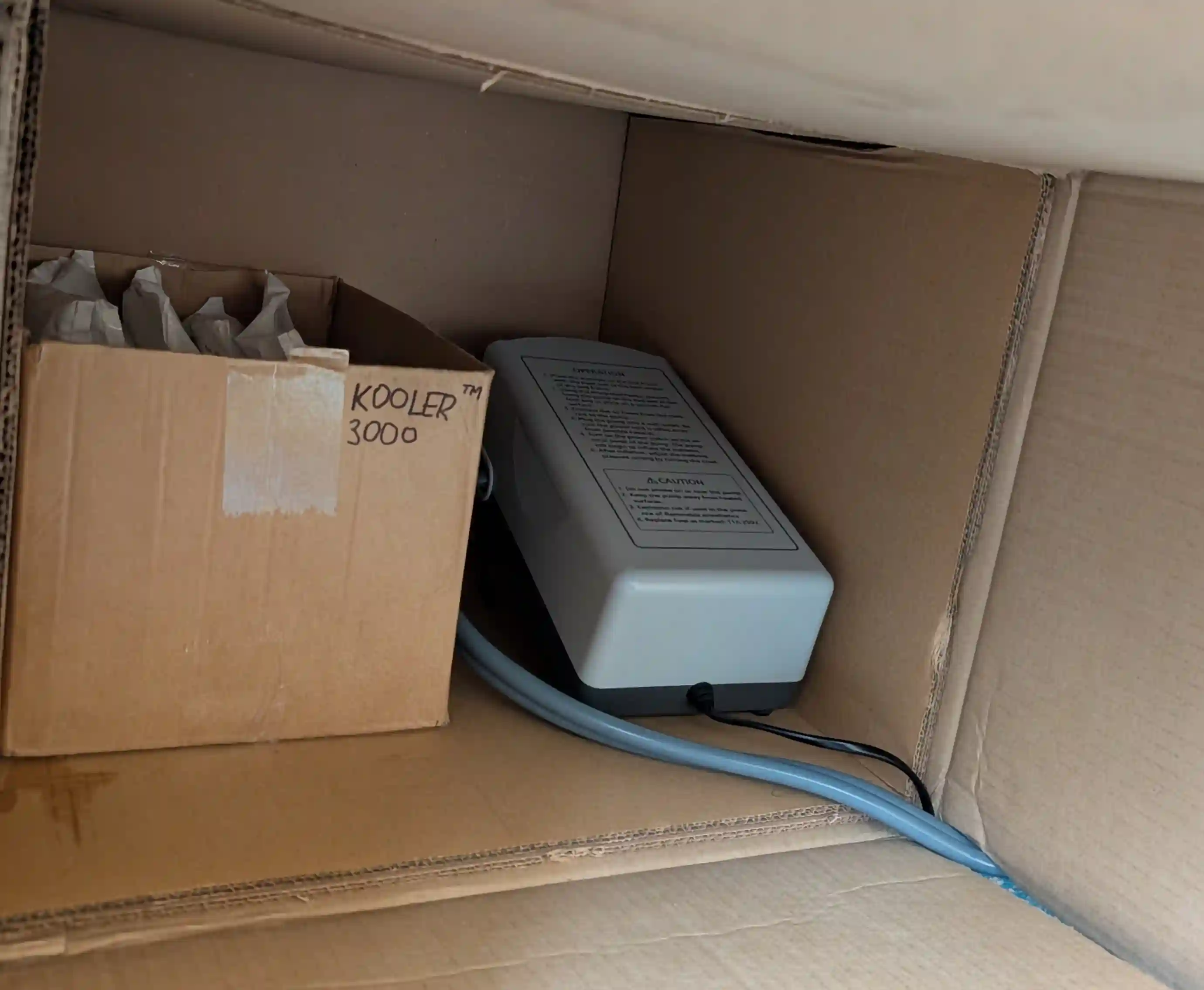
A box of ice gel packs and a mattress compressor within a large cardboard box
The concept of the cooled mattress worked. The problem is that it worked too well. The mattress was way too cold compared to the room temperature, and I woke up freezing with a stiff back and neck.
I thought the three-layer cardboard box would be helpful to efficiently keep the cool air within the system, but it was over-insulated. I ended up keeping the box open, so that it cooled the mattress just a bit but also helped to cool the air in the rest of the room, even if just slightly.
In the morning, I would transfer the box of ice gels into the large kitchen freezer, and they would completely freeze again by the evening. While it wasn't anywhere near a proper AC, it ended up being quite a fun heat transfer method. Cooling the room even by a degree or two was much better than nothing. Next time, I would have made this more efficient by adding a fan blowing over the ice gel packs. This would have sped up the defrosting as the ice gel packs were still partly frozen in the morning.
Unlike bulky metal keys, fobs are nicer to carry and easy to replace. And also the security mechanisms they use are fascinating. For example, most fob readers are not connected to the internet. The fob reader on the building entrance is connected to the internet, but the readers on doors to rooms are not. So if I lose my fob and get a new replacement, how does the fob reader on the door to my room deny entry for the old fob? The answer is that only after I first use the new fob key to unlock my door, the door reader is updated. It sees that this fob has a higher index than the last fob that was used, and updates itself to require at least this index. If I were to then attempt to use the old fob to unlock the door, it wouldn't work as it has a lower index than required. ↩︎
It helped a bit, but not meaningfully. ↩︎