Systematic analysis of the efficacy of water-based plant extract interaction with carbonated beverages
Abstract
Coke Zero with oat milk is the result of amalgamation of two beverages, Coke Zero and oat milk. This relatively unknown but distinct combination offers the textural viscosity of oat milk with the effervescence of Coke Zero. Despite the existence of research into carbonated beverages and water-based plant extracts respectively, their combination remains understudied. This paper delves into the synergy of a drink which is more than the sum of its parts, presenting novel approaches in the field of carbonated beverage flavor analysis by enhancing state-of-the-art research on water-based plant extract interaction.
Methodology
This research employs a thoroughly mixed-method approach, encompassing both qualitative and quantitative methods, yielding an effective framework for the analysis of this topic.
Analysis
Participants (n=2) in this study were asked to describe the perceived impression of this combination. To streamline the analysis, responses were limited to a single-word adjective, leveraging the One-Adjective Test Scale (OATS).
| Participant | Response |
|---|---|
| Participant #1 | disgusting |
| Participant #2 | disgusting |
Table 1: Participant perception results
Recorded data was processed using Python inside a Jupyter Notebook, utilizing Pandas as the industry-standard data analysis library. All results were anonymized to comply with data protection requirements in order to preserve the privacy and integrity of participants.
Analysis of these results revealed an unexpected aversion of the perception of this beverage in most participants, likely highlighting a case of food neophobia.
The second survey assessed the responses of participants after tasting the reviewed beverage. This experiment employed a control group, which was given plain Coke Zero without a water-based plant extract.
| Participant | Group | Substance | Response |
|---|---|---|---|
| Participant #1 | Control | Coke Zero | okay |
| Participant #2 | Experimental | Coke Zero with oat milk | (no response) |
Table 2: Participant taste results
To ensure the implementation of a double-blind research design, both the researchers and participants were blindfolded for the duration of the experiment. This further eliminates possible observer bias in researchers.
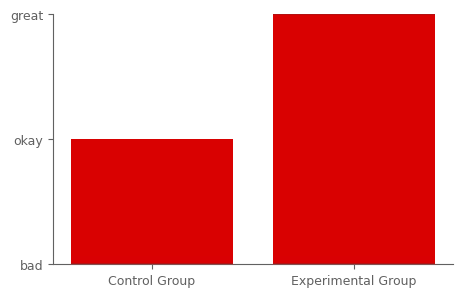
Figure 1: Comparison of Control Group vs Experimental Group ratings
Participants in the control group reported average results in taste, serving as the baseline for the analysis. The lack of response from participants in the experimental group highlights the unanimous astonishment over the unexpected quality of the combined beverage, with the time-to-response index therefore overwhelmingly indicating a positive impression.
Results
The study found that the taste response of the participants in the experimental group greatly surpassed their impression, as compared to their initial perception. The control group participants did not report an increased perception in the quality of the beverage, eliminating the placebo effect as a possible cause of this outcome. This provides compelling evidence (n=2, p≤1) for the unprecedented potential of Coke Zero with oat milk. [1]
Limitations
The potential limitations of the study include the fact the altitude at the time of testing has not been taken into consideration. While it has been observed that altitudinal changes may affect the perception of human taste, the authors have not found these claims statistically significant to include this as a confounding variable.
Additionally, it is possible that the use of Python 2 may have limited the efficiency of data processing in this study. Switching to Python 3 may allow a more comprehensive analysis of the participant data.
Future work
Further research is needed to determine the ideal ratio of Coke Zero and oat milk.
Additional areas of research include the use of Pepsi instead of Coke, where desired. In general, any sugar-free sparkling beverage is applicable as an alternative research subject. [2]
Furthermore, soy milk may also be used instead of oat milk, but the applicability may be limited due to unpleasant aftertaste. While almond milk has not been tested in this combination, it should be approached carefully due to unknown cross-interactions. [3]
These findings are further supported by the generous funding from Big Beverage. ↩︎
It should be noted that while the sugar-free attribute may be omitted, the authors do not endorse the consumption of an acidified, carbonated aqueous solution amended with saccharose or isoglucose. ↩︎
Animal milk is also known to be one of possible alternatives to oat milk. ↩︎